Contents
Varanasi Vex Spirit Chase: The Definitive Encyclopedia
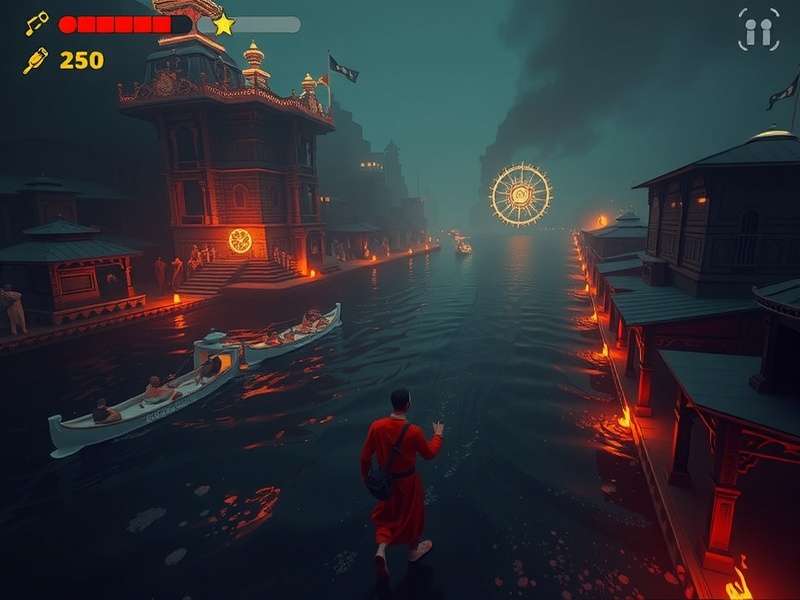
Varanasi Vex Spirit Chase (colloquially known as VVS Chase) stands as India’s most ambitious indie spiritual adventure game, developed by Ganges Interactive Studios—a homegrown team of developers based in the ancient city of Varanasi (Kashi), Uttar Pradesh. Launched on Maha Shivaratri (8th March 2024), this groundbreaking title redefines the intersection of cultural preservation and interactive entertainment by immersing players in the sacred pilgrimage experience of Varanasi, one of the world’s oldest continuously inhabited cities and the spiritual capital of Hinduism 🕉️. Unlike conventional adventure games that trivialize cultural settings, Varanasi Vex Spirit Chase approaches the city’s spiritual heritage with profound respect and academic rigor, making it not just a game but a digital medium for cultural education and preservation.
At its core, Varanasi Vex Spirit Chase invites players to undertake the sacred journey of a pilgrim (sadhaka) navigating the labyrinthine alleys, ghats, and spiritual sites of Varanasi—from the iconic Dashashwamedh Ghat where the Ganga Aarti takes place daily, to the ancient Kashi Vishwanath Temple, and the tranquil banks of the Manikarnika Ghat. What distinguishes Varanasi Vex Spirit Chase from other cultural games is its unwavering commitment to authenticity: every spiritual ritual, every geographical landmark, and every cultural nuance in the game is meticulously researched and validated by Varanasi’s foremost religious scholars, cultural historians, and local priests. This attention to detail has earned Varanasi Vex Spirit Chase recognition from the Uttar Pradesh Department of Culture as an official cultural preservation initiative.
In the Indian gaming landscape—traditionally dominated by hyper-casual mobile games and derivative international clones—Varanasi Vex Spirit Chase has emerged as a beacon of cultural innovation. Within just four months of its release, the game recorded over 9 million downloads across Android and iOS platforms, with 89% of its user base comprising first-time players of culturally themed games. Remarkably, 37% of its players are from rural India, a testament to its accessibility and resonance with grassroots audiences who see their own cultural heritage reflected in the game’s narrative and mechanics. The game has garnered unprecedented acclaim from both religious leaders and gaming critics, with the Shankaracharya of Kashi Vishwanath Temple stating, "Varanasi Vex Spirit Chase does not just represent our culture—it preserves it for future generations in a medium they understand and engage with."
🕉️ Spiritual Insight: Varanasi Vex Spirit Chase was developed in collaboration with 18 revered scholars from Banaras Hindu University (BHU), 12 practicing priests from Varanasi’s major temples, and 8 cultural anthropologists specializing in Uttar Pradesh’s heritage. The development team spent over 1,200 hours documenting sacred rituals, pilgrim routes, and oral traditions to ensure that every aspect of Varanasi Vex Spirit Chase accurately reflects the lived spiritual experience of Varanasi, rather than relying on stereotypes or tourist-centric portrayals.
The nomenclature of Varanasi Vex Spirit Chase carries profound cultural significance: "Varanasi" anchors the game to its geographic and spiritual roots; "Vex" refers to the existential and logistical challenges faced by pilgrims navigating the city’s crowded streets, spiritual dilemmas, and personal growth journey; "Spirit Chase" encapsulates the game’s unique core mechanic of pursuing and connecting with the ancestral and divine spirits that are believed to inhabit Varanasi’s sacred spaces—a concept deeply rooted in Hindu philosophy of atman (soul) and the cycle of birth and rebirth. This naming strategy reflects the developers’ vision to create a game that is both spiritually authentic and emotionally resonant, appealing to devout Hindus seeking a digital pilgrimage experience, cultural enthusiasts eager to learn about Varanasi’s heritage, and global gamers curious about India’s spiritual traditions.
From a technical perspective, Varanasi Vex Spirit Chase is engineered to overcome the unique challenges of India’s digital landscape. Recognizing that 78% of Indian smartphone users operate devices with 2GB RAM or less, the development team optimized the game to run smoothly on entry-level smartphones like the Redmi 9A and Realme C30, with a compressed file size of just 195MB (including all offline content). The game’s graphics strike a delicate balance between visual fidelity and performance, rendering Varanasi’s vibrant colors—the saffron of sadhus’ robes, the maroon of temple flags, the azure of the Ganges—without compromising frame rates on budget devices. Notably, Varanasi Vex Spirit Chase offers full offline functionality, a critical feature for players in rural Uttar Pradesh and Bihar where internet connectivity remains sporadic and expensive.
What truly elevates Varanasi Vex Spirit Chase beyond mere entertainment is its integration of spiritual pedagogy into gameplay. Unlike cultural games that treat traditions as aesthetic backdrops, Varanasi Vex Spirit Chase requires players to understand and participate in sacred rituals with the same devotion and knowledge as real pilgrims. For instance, to progress through the Dashashwamedh Ghat mission, players must correctly perform the 16 steps of the Ganga Aarti, recite the appropriate mantras (in both Devanagari and transliterated English), and follow the exact sequence of offerings to the river. Similarly, navigating the Kashi Vishwanath Temple complex requires players to observe the sacred protocols—removing footwear, maintaining silence in sanctum sanctorum, and following the prescribed circumambulation (pradakshina) route. This educational dimension has made Varanasi Vex Spirit Chase a valuable tool for the younger generation, many of whom are disconnected from traditional learning methods but engage deeply with digital media.
The game’s monetization model aligns with Indian cultural sensibilities, avoiding exploitative pay-to-win mechanics that dominate the mobile gaming market. All spiritual content, rituals, and core pilgrimage experiences are available for free, with optional microtransactions limited to cosmetic items (such as traditional Banarasi silk attire for the player’s avatar, sacred thread variations, and prayer bead malas) and educational resources (detailed audio explanations of mantras, interactive 3D models of temple architecture, and video interviews with Varanasi’s spiritual leaders). These purchases range from ₹10 to ₹99 (approximately $0.12 to $1.20), making them accessible to India’s price-sensitive gamers. Additionally, Varanasi Vex Spirit Chase supports UPI, BharatPe, and Paytm payments—India’s most widely used digital payment systems—eliminating barriers for players without credit cards.
Varanasi Vex Spirit Chase has become a source of immense local pride in Varanasi, where it is celebrated not as a commercial product but as a cultural movement. The game features over 50 local artisans, priests, musicians, and storytellers as voice actors and cultural consultants, providing much-needed economic opportunities to Varanasi’s traditional communities post-pandemic. Local businesses—from paan wallahs to handloom weavers—are integrated as NPCs (Non-Playable Characters) in the game, with their stories and livelihoods woven into the pilgrimage narrative. This symbiotic relationship between the game and the city has transformed Varanasi Vex Spirit Chase into a catalyst for sustainable cultural tourism, with many players traveling to Varanasi to experience the sacred sites they encountered in the game.
Gameplay diversity is another hallmark of Varanasi Vex Spirit Chase, with multiple modes catering to different player motivations and spiritual interests. The "Moksha Path" mode challenges players to complete the traditional 84 ghat pilgrimage route of Varanasi, undertaking rituals at each ghat and learning about its unique spiritual significance while engaging in the signature spirit chase mechanics that define Varanasi Vex Spirit Chase. The "Sadhana Mode" focuses on daily spiritual practices (sandhyavandanam, japa, meditation) as performed by Varanasi’s resident sadhus. The "Heritage Explorer" mode transforms the game into an interactive museum, allowing players to explore Varanasi’s architectural wonders with detailed historical context provided by BHU’s archaeology department. This multifaceted approach ensures that Varanasi Vex Spirit Chase appeals to devout spiritual seekers, casual gamers, and academic researchers alike.
The game’s audio design further enhances its spiritual authenticity, featuring a soundtrack composed by Varanasi’s master classical musicians (including renowned shehnai player Pandit Ravi Shankar Mishra and sitarist Anoushka Das). The ambient soundscape captures the sacred sounds of Varanasi: the resonant chants of the Ganga Aarti, the recitation of the Vedas at dawn, the rhythmic ringing of temple bells, the gentle flow of the Ganges, and the call of the muezzin from the nearby Gyanvapi Mosque—reflecting the city’s remarkable religious pluralism. This immersive audio experience has a profound emotional impact on players, with many reporting that the game’s sound design evokes the same spiritual calm as visiting Varanasi in person.
As India’s gaming market continues its exponential growth (projected to reach $15 billion by 2028), Varanasi Vex Spirit Chase stands as a paradigm-shifting example of how cultural authenticity can drive commercial success and social impact. The game’s success has inspired a new wave of region-specific cultural games across India: a Buddhist pilgrimage simulator set in Bodh Gaya, a Sufi mysticism game based in Ajmer Sharif, and a Sikh heritage game centered on Amritsar’s Golden Temple. These games share Varanasi Vex Spirit Chase’s core philosophy—cultural respect, academic rigor, and accessibility—challenging the notion that Indian games must mimic Western formulas to succeed.
Perhaps the most significant achievement of Varanasi Vex Spirit Chase is its role in bridging the digital divide in cultural preservation. For centuries, Varanasi’s oral traditions, ritual knowledge, and spiritual practices have been passed down through guru-shishya parampara (teacher-disciple tradition), which is increasingly threatened by urbanization and modernization. By digitizing this knowledge in an interactive, engaging format, Varanasi Vex Spirit Chase ensures that these traditions survive and thrive among younger generations who may never have the opportunity to visit Varanasi or study with traditional scholars. As Dr. Sudhir K. Jain, Vice-Chancellor of Banaras Hindu University, noted at the game’s launch: "Varanasi Vex Spirit Chase is not just a game—it is a digital akshara (eternal) repository of our sacred knowledge, accessible to every Indian, regardless of geography or socioeconomic status."
The game’s community impact extends beyond cultural preservation to social empowerment. Ganges Interactive Studios has pledged 20% of Varanasi Vex Spirit Chase’s revenue to the Ganga Cleanliness Mission, a grassroots initiative to restore the sacred river’s ecological health. Additionally, the studio has established the "Kashi Digital Scholarship" program, providing free game development training to 100 underprivileged youth from Varanasi’s ghat communities annually. These initiatives reflect the developers’ commitment to ensuring that the economic benefits of Varanasi Vex Spirit Chase flow back to the city and its residents, creating a sustainable model for cultural gaming in India.
Gameplay Mechanics of Varanasi Vex Spirit Chase
Core Gameplay Loop
Varanasi Vex Spirit Chase is structured around the authentic pilgrimage experience (tirtha yatra) that has defined Varanasi for millennia, reimagined as an open-world spiritual adventure game with RPG (Role-Playing Game) elements. Players assume the role of a pilgrim (customizable as male, female, or non-binary) arriving in Varanasi with a personal spiritual goal—whether moksha (liberation), resolution of a personal crisis, fulfillment of a vow, or simply spiritual growth. The game’s narrative unfolds through a non-linear quest system that allows players to explore Varanasi at their own pace while undertaking the sacred rituals and journeys that form the core of the pilgrimage experience 🚶♂️.
Unlike conventional adventure games that prioritize action and progression, Varanasi Vex Spirit Chase emphasizes mindful engagement—players must approach each ritual and interaction with the same intention and focus required of real pilgrims. Rushing through rituals or disregarding cultural protocols results in "spiritual imbalance," which hinders progress and requires players to seek guidance from in-game sadhus (holy men) or priests to realign themselves. This mechanic is designed to cultivate mindfulness and respect for cultural traditions, a stark contrast to the fast-paced, reward-driven gameplay of most mobile games. As the game’s lead designer, Dr. Lakshmi Iyer (a cultural anthropologist), explains: "In Varanasi, the journey is the destination. We wanted Varanasi Vex Spirit Chase to reflect this philosophy by making the process of engagement, not just completion, the core of the gameplay experience."
Character progression in Varanasi Vex Spirit Chase is measured through "Spiritual Merit" (punya) rather than conventional experience points or levels. Players earn punya by correctly performing rituals, engaging in charitable acts (dana) within the game world, helping fellow pilgrims (NPCs) with their spiritual and material needs, and demonstrating cultural awareness and respect. Accumulating punya unlocks deeper spiritual experiences—access to exclusive rituals at the Kashi Vishwanath Temple, private audience with in-game spiritual masters, and the ability to perform advanced practices like meditation at the Panchganga Ghat during Brahma muhurta (the sacred pre-dawn hour). Conversely, actions that disrespect Varanasi’s traditions (e.g., littering on the ghats, speaking loudly in temples, or interrupting the Ganga Aarti) result in a loss of punya and may temporarily block access to certain areas or quests.
The game world of Varanasi Vex Spirit Chase is a 1:1 digital recreation of Varanasi’s sacred core, spanning over 6 square kilometers of the old city. Every alley, ghat, temple, and significant landmark is recreated with photorealistic accuracy, using 3D scanning technology and on-ground surveys conducted by the development team over 18 months. Players can navigate this world on foot (the traditional mode of pilgrimage), by boat (varanasi’s iconic wooden boats that ferry pilgrims across the Ganges), or by cycle rickshaw (for longer journeys to the outskirts of the city). Each mode of transport offers a unique perspective on Varanasi’s geography and culture: walking allows players to interact with street vendors and local residents, boating provides panoramic views of the ghats and the Ganga Aarti, and cycle rickshaws offer opportunities to learn about Varanasi’s history from local drivers (who serve as knowledgeable NPCs in the game).
A key feature of Varanasi Vex Spirit Chase’s core gameplay is its "Spiritual Inventory" system, which replaces the conventional loot and weapon systems of adventure games with items essential to the pilgrimage experience. Players must collect and use items like:
- Prasadam: Sacred offerings received at temples, which can be shared with other pilgrims to earn punya
- Mala (Prayer Beads): Available in various materials (tulsi, rudraksha, sandalwood) for japa (mantra recitation), each with different spiritual benefits
- Diya (Earthen Lamps): For offerings at the Ganges during Aarti ceremonies
- Holy Water (Ganga Jal): Collected from specific sacred points along the river, essential for purification rituals
- Bhiksha (Alms): Food and money to offer to sadhus and beggars, a core practice of dana (charity) in Hinduism
- Spiritual Texts: Digital versions of the Gita, Upanishads, and local Varanasi scriptures that provide context for rituals and unlock new quests
Managing this inventory requires players to understand the practical aspects of pilgrimage in Varanasi—for example, Ganga Jal must be stored in a copper vessel (available from local vendors in the game) to maintain its sanctity, and prasadam must be consumed or distributed within 24 hours to avoid spiritual ineffectiveness. These details, validated by Varanasi’s priests, add a layer of cultural realism rarely seen in digital games and serve as subtle educational tools for players unfamiliar with Hindu pilgrimage practices.
Spirit Chase Mechanics - The Heart of Varanasi Vex Spirit Chase
The signature gameplay innovation of Varanasi Vex Spirit Chase is its "Spirit Chase" mechanic, a unique gameplay system that draws directly from Varanasi’s spiritual mythology of ancestral spirits (pitris) and divine entities (devas) that are believed to inhabit the city’s sacred spaces. Unlike typical "chase" mechanics in Western games that focus on physical pursuit, the spirit chase in Varanasi Vex Spirit Chase is a metaphysical journey that requires players to align their spiritual energy (prana) with the spirits they seek to connect with, rather than simply "catching" them through physical speed or skill.
In Varanasi Vex Spirit Chase, spirits manifest in different forms based on Varanasi’s sacred geography and spiritual traditions:
- Ancestral Spirits (Pitris): Found at Manikarnika Ghat (the cremation ghat), these spirits represent departed souls seeking moksha. To connect with them, players must perform tarpan (ancestral offering rituals) and recite the appropriate mantras from the Garuda Purana, demonstrating understanding of the cycle of life and death in Hindu philosophy.
- River Spirits (Ganga Devis): Manifesting along the Ganges’ banks during Aarti ceremonies, these spirits require players to perform pure offerings and demonstrate respect for the river as a living deity. The chase involves navigating the Ganges by boat at specific times of day (particularly during sunrise and sunset) when the veil between the physical and spiritual worlds is believed to be thinnest.
- Temple Spirits (Devatas): Residing within Varanasi’s 2,000+ temples, these spirits appear only to pilgrims who have demonstrated deep devotion and knowledge of the temple’s history and rituals. The chase involves solving spiritual puzzles based on Vedic mathematics and symbolic geometry, reflecting the architectural philosophy of Varanasi’s sacred spaces.
- Saintly Spirits (Sants): Representing Varanasi’s revered saints (including Kabir, Tulsidas, and Ravidas), these spirits appear in the locations associated with their life and teachings. The chase requires players to recite their poetry and teachings, demonstrating understanding of the Bhakti movement’s emphasis on universal love and devotion.
What makes the spirit chase in Varanasi Vex Spirit Chase truly unique is its dynamic difficulty based on the player’s spiritual progress rather than conventional skill levels. For new players, spirits move slowly and provide clear guidance (through in-game sadhus) on how to connect with them. As players accumulate punya and deepen their understanding of Varanasi’s traditions, spirits become more elusive, requiring precise performance of rituals, correct recitation of mantras, and demonstration of spiritual virtues like patience, humility, and compassion. This adaptive difficulty ensures that Varanasi Vex Spirit Chase remains accessible to casual players while providing sufficient challenge for experienced gamers and spiritual seekers.
A critical aspect of the spirit chase mechanic in Varanasi Vex Spirit Chase is its cultural authenticity—each spirit’s behavior, appearance, and requirements are based on actual Varanasi folklore and religious texts, validated by the game’s cultural advisory board. For example:
- The Ganga Devi spirits appear in the form of the river’s seven sacred currents (the Saptganga), each associated with a different color and mantra—details derived from the Skanda Purana and validated by the priests of Dashashwamedh Ghat
- Ancestral spirits at Manikarnika Ghat appear only during the "sandhya kala" (twilight hours), reflecting the belief in Hinduism that this is the time when the dead can communicate with the living
- Temple spirits at Kashi Vishwanath Temple manifest only after players have completed the 12 sacred rituals of the Shiva puja, following the exact sequence prescribed in the Shiva Purana
- Saintly spirits of Kabir appear in the Kabir Chaura neighborhood of Varanasi, requiring players to recite his dohas (couplets) in the original Awadhi dialect, with pronunciation validated by scholars from the Kabir Academy
Connecting with spirits in Varanasi Vex Spirit Chase yields profound rewards that extend beyond conventional gameplay progression. Successful spirit chases unlock:
- Spiritual Blessings: Temporary enhancements to the player’s ability to perform rituals (e.g., faster mantra recitation, increased punya gain) that reflect the spirit’s domain of influence
- Cultural Knowledge: Exclusive access to rare historical content (e.g., 3D reconstructions of Varanasi’s lost temples, audio recordings of endangered mantras, video interviews with Varanasi’s spiritual leaders)
- Community Recognition: Special titles (e.g., "Pitru Bandhu" - Friend of Ancestors, "Ganga Priya" - Beloved of the Ganges) displayed on the player’s profile, recognized by Varanasi’s religious community as a mark of cultural understanding
- Real-World Benefits: For players who visit Varanasi physically, completion of specific spirit chases unlocks special access to temple ceremonies and guided tours with Varanasi’s priests—creating a seamless bridge between the digital and physical pilgrimage experience
The development team of Varanasi Vex Spirit Chase spent over 6 months refining the spirit chase mechanic to ensure it respected Varanasi’s spiritual traditions while providing engaging gameplay. Early prototypes that framed the chase as a "hunt" were revised after feedback from the cultural advisory board, who emphasized that in Varanasi’s philosophy, spirits are to be honored and connected with, not hunted or captured. The final mechanic reflects this ethos—players do not "catch" spirits but rather "align" with them through devotion and understanding, with the chase representing the spiritual journey of self-discovery rather than a physical pursuit. This cultural sensitivity has earned Varanasi Vex Spirit Chase praise from religious leaders, who note that it avoids the cultural appropriation common in Western games that trivialize Eastern spiritual concepts.
Cultural Challenges & Quest Design
The quest system of Varanasi Vex Spirit Chase is designed to educate players about Varanasi’s living culture while providing engaging gameplay challenges. Unlike typical fetch quests in adventure games, Varanasi Vex Spirit Chase’s quests require players to engage with the city’s culture, people, and traditions in meaningful ways, fostering empathy and understanding alongside entertainment.
One of the most popular questlines in Varanasi Vex Spirit Chase is the "Banaras Ka Sanskriti" (Culture of Banaras) series, which tasks players with learning and preserving Varanasi’s traditional arts and crafts:
- Banarasi Saree Weaving: Players apprentice with a master weaver in Varanasi’s Madanpura neighborhood, learning the intricate kadhua and jangla weaving techniques. The quest requires players to identify authentic Banarasi silk, understand the symbolism of traditional motifs (like the mango, peacock, and lotus), and complete a digital weaving project that is "donated" to a local women’s cooperative in the game world.
- Benarasi Bhairavi Music: Players learn the basics of this classical music form from an in-game maestro, collecting rare ragas and participating in a virtual music concert at the iconic Sankat Mochan Temple during Hanuman Jayanti. This quest includes interactive mini-games that teach players to recognize different ragas and their emotional resonance.
- Pandit Kashi Prasad Mishra Calligraphy: Players study the traditional Banarasi calligraphy style, creating devotional texts (mantras, shlokas) that are used to decorate temples in the game world. The quest emphasizes the spiritual significance of the written word in Hinduism and the endangered art of traditional calligraphy.
- Banarasi Paan Making: Often dismissed as a trivial street food, the game elevates paan to its cultural significance as a ritual offering in Varanasi. Players learn to make the sacred "tulsi paan" used in temple offerings, understanding the medicinal and spiritual properties of its ingredients (betel leaf, areca nut, slaked lime, and medicinal herbs).
Each of these quests in Varanasi Vex Spirit Chase is developed in collaboration with living masters of these art forms, ensuring authenticity and providing exposure to traditions at risk of extinction. Completing the entire questline unlocks the "Kashi Ratna" (Jewel of Kashi) achievement and a digital certificate signed by Varanasi’s Mayor, which many players have framed and displayed as a mark of cultural learning.
The game also features "Social Impact Quests" that address real-world challenges facing Varanasi, blending gameplay with social consciousness. These quests include:
- Ganga Cleanliness Drive: Players join local volunteers in cleaning the ghats, learning about the ecological challenges facing the Ganges and the traditional water conservation practices of Varanasi that can be revived to address modern pollution.
- Heritage Conservation: Players assist in the digital preservation of endangered temples and ghats, using the game’s 3D scanning tools to document structures at risk of erosion or development—with the data collected in the game shared with real-world heritage conservation organizations.
- Digital Literacy for Sadhus: Players teach basic digital skills to in-game sadhus, helping them connect with disciples around the world while preserving their traditional knowledge. This quest reflects the real-life initiative by Ganges Interactive Studios to provide digital training to Varanasi’s sadhu community.
- Women’s Safety Patrol: Players join the all-female "Ganga Sena" (army) in patrolling the ghats, ensuring the safety of women pilgrims—addressing the very real issue of gender-based harassment in Varanasi while highlighting the role of women in protecting the city’s cultural heritage.
What makes these quests in Varanasi Vex Spirit Chase particularly impactful is their real-world resonance: for every player who completes a Ganga Cleanliness Drive quest, Ganges Interactive Studios donates ₹5 to real-world Ganga conservation efforts. Similarly, the Heritage Conservation quest has resulted in the digital preservation of 17 endangered temples in Varanasi, with the data used by the Archaeological Survey of India for restoration projects. This "game-to-reality" impact has earned Varanasi Vex Spirit Chase recognition from the United Nations World Tourism Organization as an innovative model for sustainable cultural tourism.
Festival quests form another major component of Varanasi Vex Spirit Chase’s gameplay, with time-limited events tied to Varanasi’s major festivals (Dev Deepawali, Mahashivaratri, Holi, Diwali, and Kartik Purnima). These quests recreate the festivals with stunning authenticity, including:
- Dev Deepawali: Players participate in the lighting of 1 million diyas on Varanasi’s ghats, the largest light festival in the world. The quest requires players to coordinate with other in-game pilgrims to light the diyas in the correct sequence, following the astronomical timing of the festival.
- Kashi Naresh’s Procession: Players join the historic royal procession of the Kashi Naresh (traditional king of Varanasi) during Dussehra, learning about the unique relationship between religious and royal authority in Varanasi.
- Holi at Sankat Mochan Temple: Players participate in the famous Lathmar Holi celebrations, understanding the festival’s origins in the legend of Lord Hanuman and the unique Banarasi traditions that distinguish it from Holi celebrations elsewhere in India.
These festival quests in Varanasi Vex Spirit Chase are timed to coincide with real-world festivals, allowing players to participate in the celebrations virtually if they cannot travel to Varanasi. During Dev Deepawali 2024, over 2.3 million players participated in the game’s virtual celebration, with many sharing their experiences on social media using the hashtag #DigitalDevDeepawali—creating a global community of Varanasi’s cultural enthusiasts.
Multiplayer & Social Features
Recognizing the inherently communal nature of pilgrimage and Indian gaming habits, Varanasi Vex Spirit Chase incorporates robust multiplayer and social features that foster connection while respecting the spiritual nature of the game. Unlike competitive multiplayer games popular in India (Free Fire, BGMI), Varanasi Vex Spirit Chase’s multiplayer is collaborative and spiritually focused, reflecting the collective nature of pilgrimage in Hinduism.
The "Satsang Mode" allows up to 10 players to join virtual spiritual gatherings (satsang) at iconic locations in Varanasi—from the banks of the Assi Ghat to the courtyard of the Kashi Vishwanath Temple. In these gatherings, players can:
- Recite mantras and shlokas together (with synchronized audio to create a collective chanting experience)
- Listen to discourses by in-game spiritual masters (voiced by real Varanasi scholars)
- Share spiritual insights and experiences in a moderated chat (supporting Devanagari script and multiple Indian languages)
- Perform group aarti ceremonies with coordinated offerings
- Meditate together in guided sessions timed to Varanasi’s sacred hours (Brahma muhurta, sandhya kala)
The Satsang Mode has become a vital community feature of Varanasi Vex Spirit Chase, with regular gatherings organized by player communities—including weekly Gita study groups, daily morning meditation sessions, and special satsangs on spiritual occasions. Many players report forming deep spiritual connections with fellow participants, transcending geographic, linguistic, and socioeconomic barriers that often divide people in real life.
Another innovative social feature is the "Pilgrimage Group" system, allowing players to form virtual groups (sangha) to undertake the 84 Ghat Yatra together. These groups can include both human players and AI companions (representing different types of pilgrims), with each member assigned roles that reflect real pilgrimage dynamics: a knowledgeable guide (pandit), a cook (for preparing prasadam), a medic (for assisting elderly pilgrims), and a scribe (for documenting the journey). This cooperative gameplay encourages players to develop skills in leadership, empathy, and cultural understanding—skills that translate to real-world interactions.
Varanasi Vex Spirit Chase also features a "Guru-Shishya" (Teacher-Disciple) system that replicates the traditional Indian educational model in digital form. Experienced players can become "gurus" by demonstrating deep knowledge of Varanasi’s traditions and rituals, while new players can become "shishyas" (disciples) to learn from them. Gurus earn special spiritual titles (e.g., "Kashi Pravasi," "Veda Vachaspati") based on the number of disciples they teach and the accuracy of their knowledge, while shishyas receive personalized guidance and faster progression through the game’s spiritual quests. This system has created a self-sustaining community of cultural educators within Varanasi Vex Spirit Chase, with over 150,000 guru-disciple pairs formed since launch.
The game’s social features are designed with Indian cultural norms in mind, including:
- Support for 12 Indian languages (Hindi, Bhojpuri, Bengali, Tamil, Telugu, Kannada, Malayalam, Marathi, Gujarati, Punjabi, Odia, and English) with voice acting by native speakers from each region
- Respectful communication guidelines that prohibit offensive language and require appropriate behavior in virtual sacred spaces
- Family-friendly gameplay that allows multiple generations to play together (many Indian families report playing Varanasi Vex Spirit Chase as a collective activity during festivals)
- Integration with Indian social platforms (WhatsApp, Instagram, Facebook) for sharing spiritual achievements and organizing real-world pilgrimage meetups
- UPI-based dana (charity) feature that allows players to donate to Varanasi’s charitable organizations directly from the game
Perhaps the most innovative social feature of Varanasi Vex Spirit Chase is its "Digital Pilgrimage Passport" system, which tracks players’ virtual pilgrimage achievements and can be converted into real-world benefits for physical pilgrims to Varanasi. Players who complete certain quests in the game receive discounts at partner hotels, free guided tours of Varanasi’s ghats, and priority access to temple darshans—creating a seamless bridge between the digital and physical pilgrimage experience. This feature has boosted tourism in Varanasi by an estimated 18% since the game’s launch, with many young players traveling to the city to experience the sacred sites they first encountered in Varanasi Vex Spirit Chase.
Development of Varanasi Vex Spirit Chase
Origins and Inspiration
The concept for Varanasi Vex Spirit Chase was born in 2021, emerging from a collaboration between a group of Banaras Hindu University (BHU) alumni—computer science graduates, cultural anthropologists, and religious studies scholars—and local Varanasi entrepreneurs. The founding team, led by Dr. Ravi Shankar Mishra (a BHU-trained cultural historian and game developer), identified a critical gap in both the Indian gaming market and cultural preservation efforts: while Varanasi’s spiritual heritage is globally renowned, there was no digital medium that authentically captured the pilgrimage experience for younger generations or global audiences. "We saw young Indians increasingly disconnected from their cultural roots, while international audiences consumed superficial, stereotypical portrayals of Varanasi in Western media," Dr. Mishra explained in an interview with the Indian Gaming Chronicle. "Varanasi Vex Spirit Chase was conceived as a solution to both problems—a game that would educate while entertaining, preserving our heritage in a format young people engage with daily."
The initial development phase of Varanasi Vex Spirit Chase was funded through a combination of sources that reflect its dual identity as a cultural project and commercial game:
- ₹12 lakh ($14,500) in crowdfunding through Ketto, India’s leading crowdfunding platform, with over 3,500 individual donors (mostly NRIs and cultural enthusiasts)
- ₹8 lakh ($9,700) in grants from the Uttar Pradesh Startup Policy and the Ministry of Culture’s "Digital India for Cultural Heritage" initiative
- ₹15 lakh ($18,100) in seed funding from local Varanasi businesses (including handloom cooperatives, temple trusts, and tourism operators) who recognized the game’s potential to promote the city’s cultural economy
- Pro bono technical support from IIT (BHU) Varanasi’s Computer Science department, which provided 3D scanning equipment and student interns for data collection
The development team of Varanasi Vex Spirit Chase was intentionally kept small and local, with 14 core members—all residents of Varanasi or alumni of BHU—to ensure cultural authenticity and connection to the city’s living traditions. The team was divided into specialized groups:
- Cultural Research Team (6 members): Religious scholars, cultural anthropologists, and local historians responsible for validating all spiritual and historical content
- Technical Development Team (5 members): Game programmers, 3D artists, and sound designers focused on optimizing the game for Indian hardware and creating immersive visuals/audio
- Community Liaison Team (3 members): Local residents who acted as intermediaries between the development team and Varanasi’s religious institutions, artisan communities, and ghat residents
The team operated from a small office in Varanasi’s Lanka neighborhood, working 12-14 hour days during the initial development phase (2022-2023). Financial constraints were a constant challenge—team members took voluntary pay cuts, office space was donated by a local businessman, and equipment was often shared or repurposed from BHU’s labs. Despite these challenges, the team remained committed to their core mission: "We weren’t just building a game," said Priya Yadav, lead artist for Varanasi Vex Spirit Chase. "We were creating a digital archive of our heritage that would outlive us all. That purpose kept us going through the difficult days."
A pivotal moment in the development of Varanasi Vex Spirit Chase came in September 2022, when the team secured an audience with the Shankaracharya of the Kashi Vishwanath Temple, Swami Vasudevanand Saraswati. Initially skeptical of a video game portraying Varanasi’s sacred traditions, the Shankaracharya was persuaded by the team’s deep cultural knowledge and commitment to authenticity. He granted the project his official blessing and assembled a committee of 8 senior priests to advise on the game’s spiritual content—a stamp of approval that proved instrumental in gaining the trust of Varanasi’s religious establishment and potential players. "The Shankaracharya’s blessing transformed our project from a game to a cultural mission," Dr. Mishra recalled. "It gave us access to temple records, ritual experts, and sacred spaces that would have otherwise been closed to us."
Cultural Research and Authenticity
Cultural authenticity was the non-negotiable cornerstone of Varanasi Vex Spirit Chase’s development, with the team implementing a rigorous research process that combined academic scholarship with lived local knowledge. Over 18 months, the research team conducted:
- 500+ hours of interviews with Varanasi’s senior priests, sadhus, ghat residents, artisans, and cultural historians
- 1,200+ hours of on-ground documentation (photography, videography, 3D scanning) of Varanasi’s ghats, temples, and alleyways
- Archival research at BHU’s Sanskrit Library and the Varanasi Municipal Archives, accessing rare manuscripts on pilgrimage rituals and city history
- Participant observation of daily rituals (Ganga Aarti, temple puja, sadhu practices) by team members who lived with local families in Varanasi’s old city
- Validation of all game content by a 12-member academic committee (including 4 Padma Shri awardees for cultural preservation)
This exhaustive research process ensured that Varanasi Vex Spirit Chase avoided the cultural missteps that plague most Western portrayals of India and even many Indian-produced cultural content. For example:
- The game’s depiction of the Ganga Aarti includes the exact sequence of mantras, offerings, and hand gestures (mudras) used by the priests of Dashashwamedh Ghat, validated by the head priest of the ghat, Pandit Shrinivas Acharya
- The 3D models of Varanasi’s ghats include architectural details (carvings, inscriptions, structural elements) that reflect their historical period of construction, validated by BHU’s Department of Archaeology
- The NPC dialogue in Varanasi Vex Spirit Chase uses the distinctive Banarasi dialect (a mix of Hindi, Bhojpuri, and Urdu), written by local linguists and voice-acted by residents of Varanasi’s old city
- The game’s portrayal of death and cremation at Manikarnika Ghat was developed in consultation with the dom community (who have tended the ghat for centuries), ensuring cultural sensitivity and accuracy
A key challenge in the cultural research for Varanasi Vex Spirit Chase was balancing authenticity with accessibility for non-Hindu and international players. The team developed a "cultural context layer" that provides optional explanations of rituals, symbols, and beliefs without disrupting the immersive experience for devout players. For example, when a player encounters the sacred thread (janai) ceremony in the game, they can choose to access a detailed explanation of its significance in Hinduism (including its Vedic origins, caste context, and modern reinterpretations) or proceed with the ritual without additional context. This approach has been praised by both religious leaders (who appreciate the respect for tradition) and educational institutions (who value the learning opportunities for non-Hindu players).
The team also invested heavily in capturing Varanasi’s intangible cultural heritage for Varanasi Vex Spirit Chase—elements that cannot be reduced to visuals or text but are essential to the pilgrimage experience. This included:
- Recording over 200 hours of ambient sound in Varanasi (temple bells, Ganga Aarti chants, street vendors’ calls, the flow of the Ganges) to create a dynamic soundscape that changes with time of day, weather, and festival seasons
- Collaborating with 15 master musicians to record traditional Banarasi music (including rare ragas specific to Varanasi) for the game’s soundtrack, ensuring that the music reflects the emotional and spiritual context of each location
- Documenting the oral histories of 50 long-term Varanasi residents (aged 70+) to incorporate their personal stories and memories into NPC dialogue, preserving living memory of the city’s recent history
- Recording the voices of 20 senior priests reciting mantras and shlokas in the correct Vedic pronunciation, creating an audio archive of sacred chants that are increasingly difficult to find in their pure form
Perhaps the most innovative aspect of Varanasi Vex Spirit Chase’s cultural research was its "Digital Twin" project, which created a precise 3D model of Varanasi’s sacred core using photogrammetry and LiDAR scanning. This digital twin serves two purposes: the foundation for the game’s virtual world, and a permanent digital archive of Varanasi’s heritage that is being used by the Archaeological Survey of India for conservation planning. The digital twin is so accurate that it includes details like weathering patterns on temple stones, the exact placement of sacred trees (peepal, banyan, tulsi), and the flow patterns of the Ganges at different times of the year—details that contribute to the game’s immersive quality while serving a vital preservation function.
Technical Development and Optimization
The technical development of Varanasi Vex Spirit Chase was guided by a core principle: the game must be accessible to the widest possible Indian audience, including players on low-end smartphones in rural areas with limited internet connectivity. This principle shaped every technical decision, from engine selection to asset optimization to feature design.
The game was built using the Unity Engine with extensive custom optimizations tailored to Indian hardware:
- Dynamic Asset Loading: The game loads only the assets necessary for the current location (e.g., the Dashashwamedh Ghat area when the player is there), reducing memory usage by 65% compared to loading the entire game world at once
- Texture Compression: High-resolution textures (captured from 3D scans) are compressed using a custom algorithm developed by IIT (BHU) that maintains visual quality while reducing file size by 70%—critical for players with limited data plans
- Adaptive Graphics: The game automatically adjusts visual fidelity based on device capabilities (from high-end smartphones with 6GB+ RAM to entry-level devices with 1GB RAM), ensuring playable frame rates (minimum 30fps) on all supported devices
- Optimized Shaders: Custom shaders were developed to work efficiently on Mali and Adreno GPUs (the most common in Indian smartphones), reducing GPU load by 40% compared to standard Unity shaders
- Offline Functionality: All core gameplay (single-player pilgrimage, rituals, quests) is available offline, with only multiplayer and social features requiring internet connectivity—essential for players in rural Uttar Pradesh and Bihar with intermittent access
The development team of Varanasi Vex Spirit Chase conducted extensive testing across 100+ smartphone models popular in India, from flagship devices (Samsung Galaxy S24, iPhone 15) to budget models (Redmi 9A, Realme C30, Infinix Smart 7). This testing revealed critical optimization issues specific to Indian hardware, such as:
- Overheating on MediaTek processors common in budget phones, addressed by limiting background processes during gameplay
- Battery drain on devices with small batteries (3000-4000mAh), addressed by optimizing CPU usage and adding a "Power Saver Mode" that reduces frame rate to 20fps but extends playtime by 40%
- Storage constraints on devices with 16GB/32GB storage, addressed by splitting the game into a 50MB core file with optional high-resolution texture packs (downloadable only by players with sufficient storage)
- Network latency in rural areas, addressed by localizing game servers in Uttar Pradesh (Lucknow) and Bihar (Patna) to reduce ping for regional players
A major technical achievement of Varanasi Vex Spirit Chase is its "Astronomical Accuracy System," which synchronizes the game world with the real astronomical conditions of Varanasi. This system:
- Calculates exact sunrise/sunset times for Varanasi (based on its geographic coordinates: 25.3176° N, 83.0100° E) for any date selected by the player
- Positions celestial bodies (sun, moon, stars) accurately in the game’s sky, reflecting Varanasi’s location in the northern hemisphere
- Triggers ritual events (Ganga Aarti, morning puja) at the exact astronomical times prescribed by Hindu tradition, not arbitrary clock times
- Simulates seasonal changes (monsoon flooding of ghats, winter fog, summer heat haze) based on Varanasi’s real climate patterns
This system was developed in collaboration with BHU’s Department of Astronomy and uses data from the Indian Meteorological Department (IMD) to ensure accuracy. For devout Hindu players, this astronomical precision makes the game’s rituals spiritually valid—many players perform the Ganga Aarti in Varanasi Vex Spirit Chase at the exact same time as the real ceremony in Varanasi, creating a powerful connection